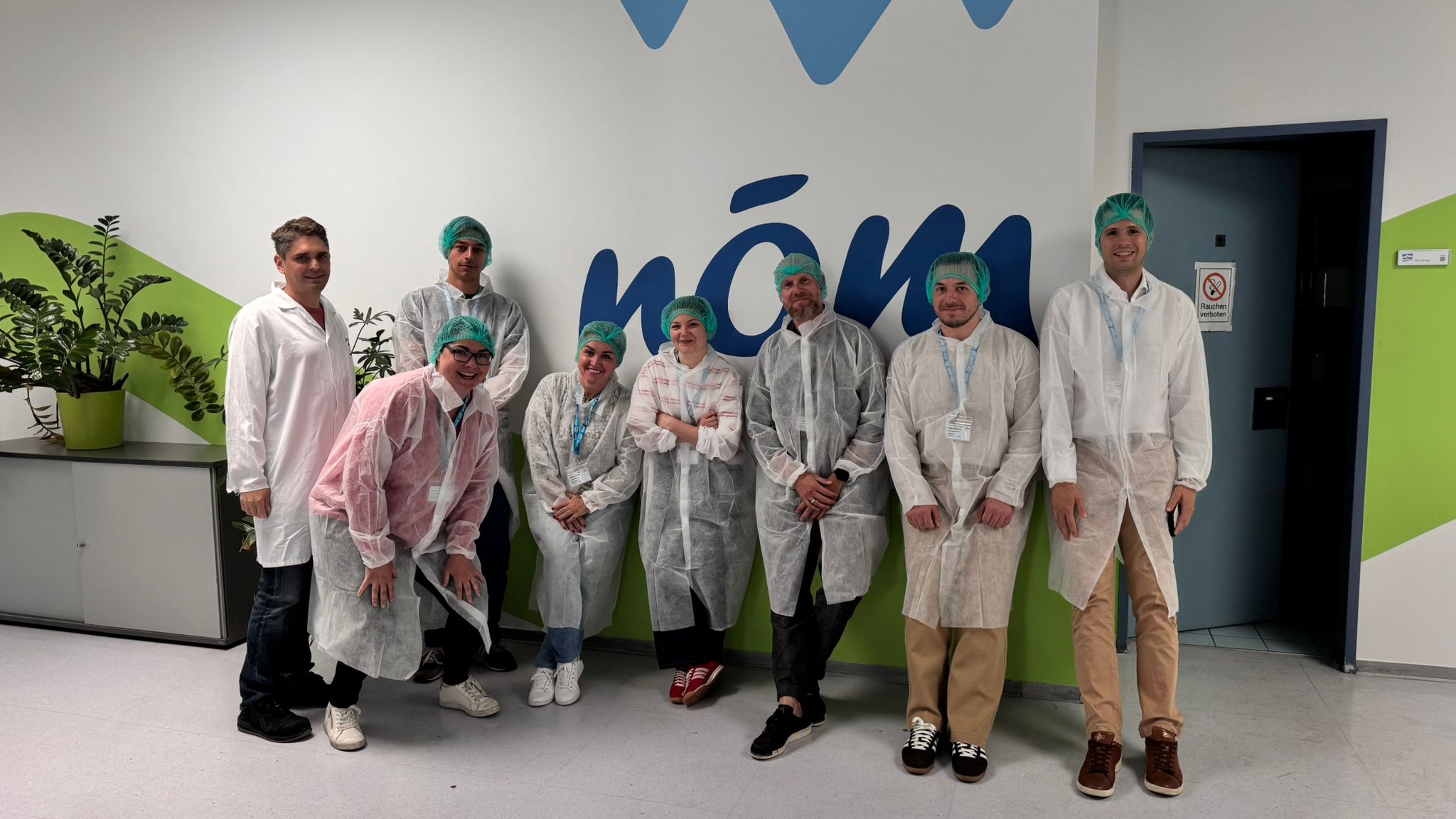
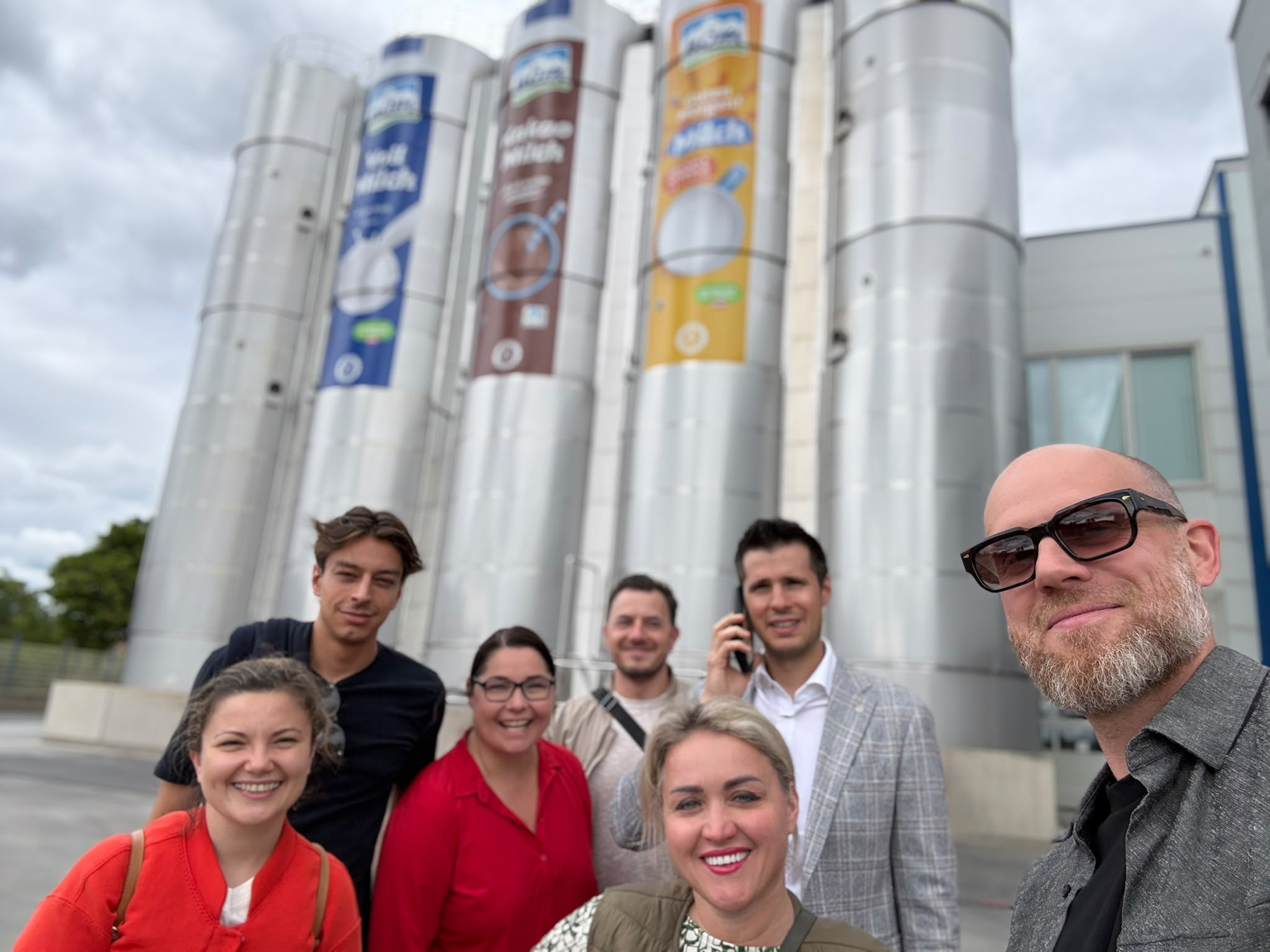
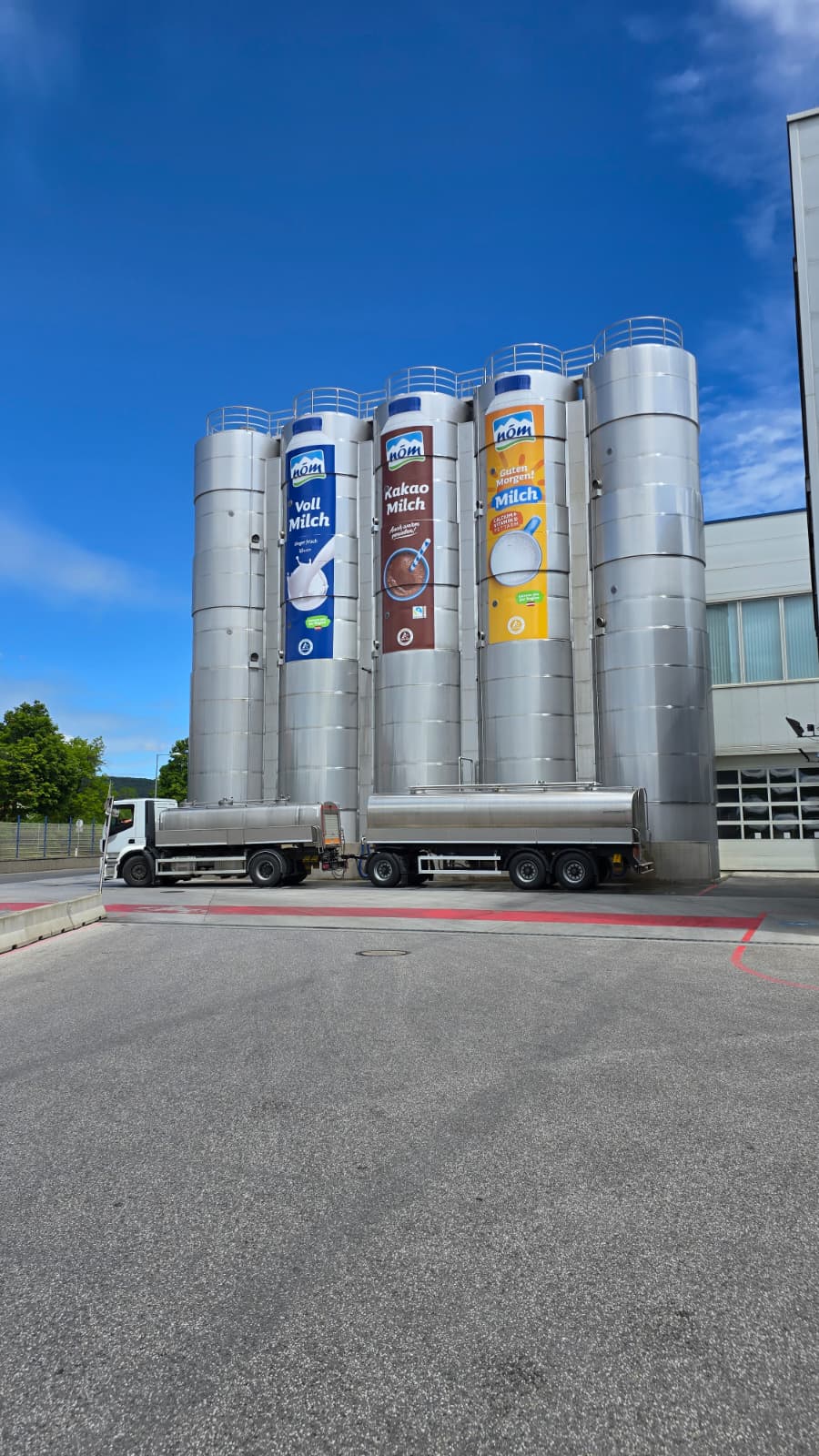
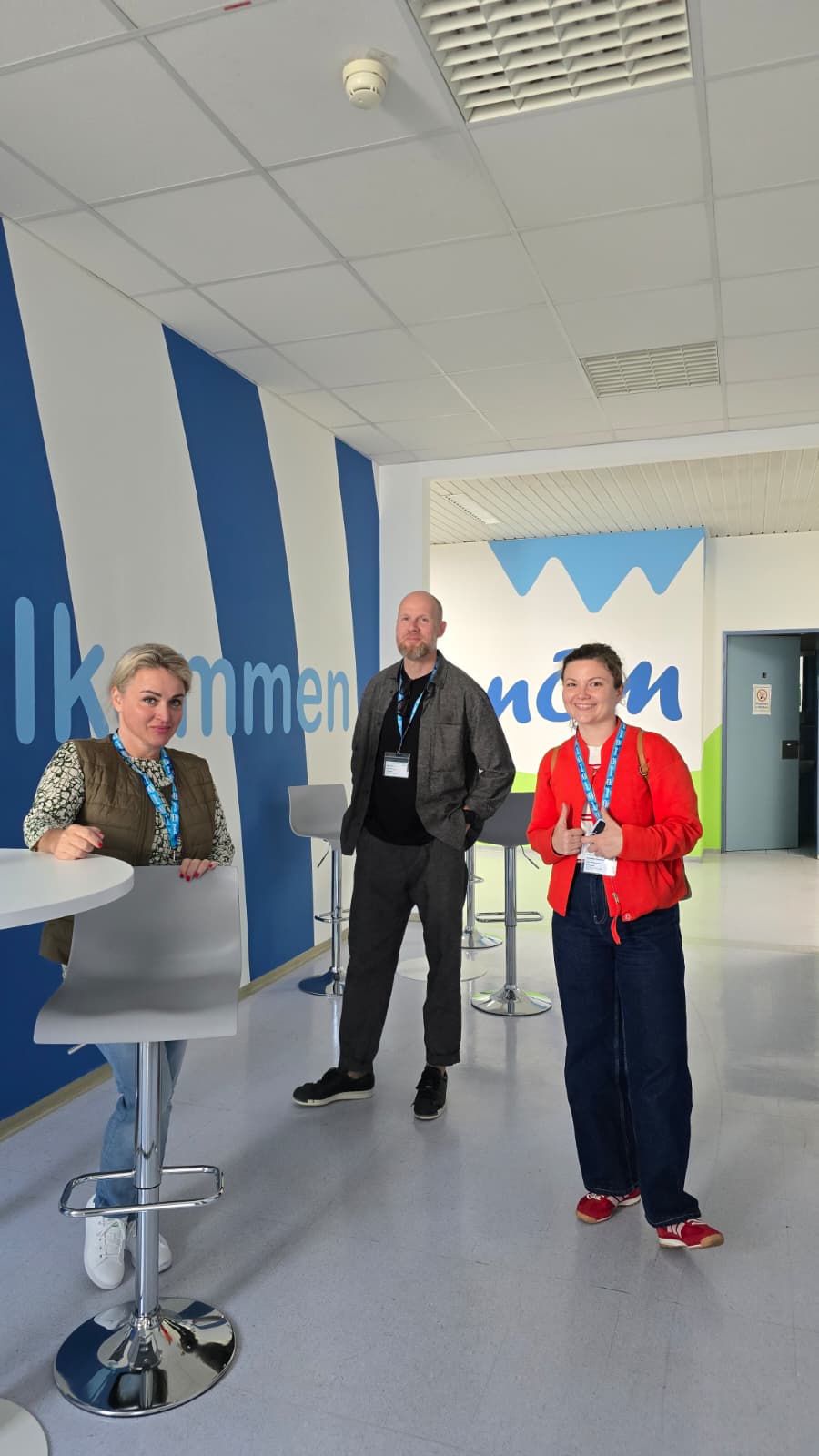
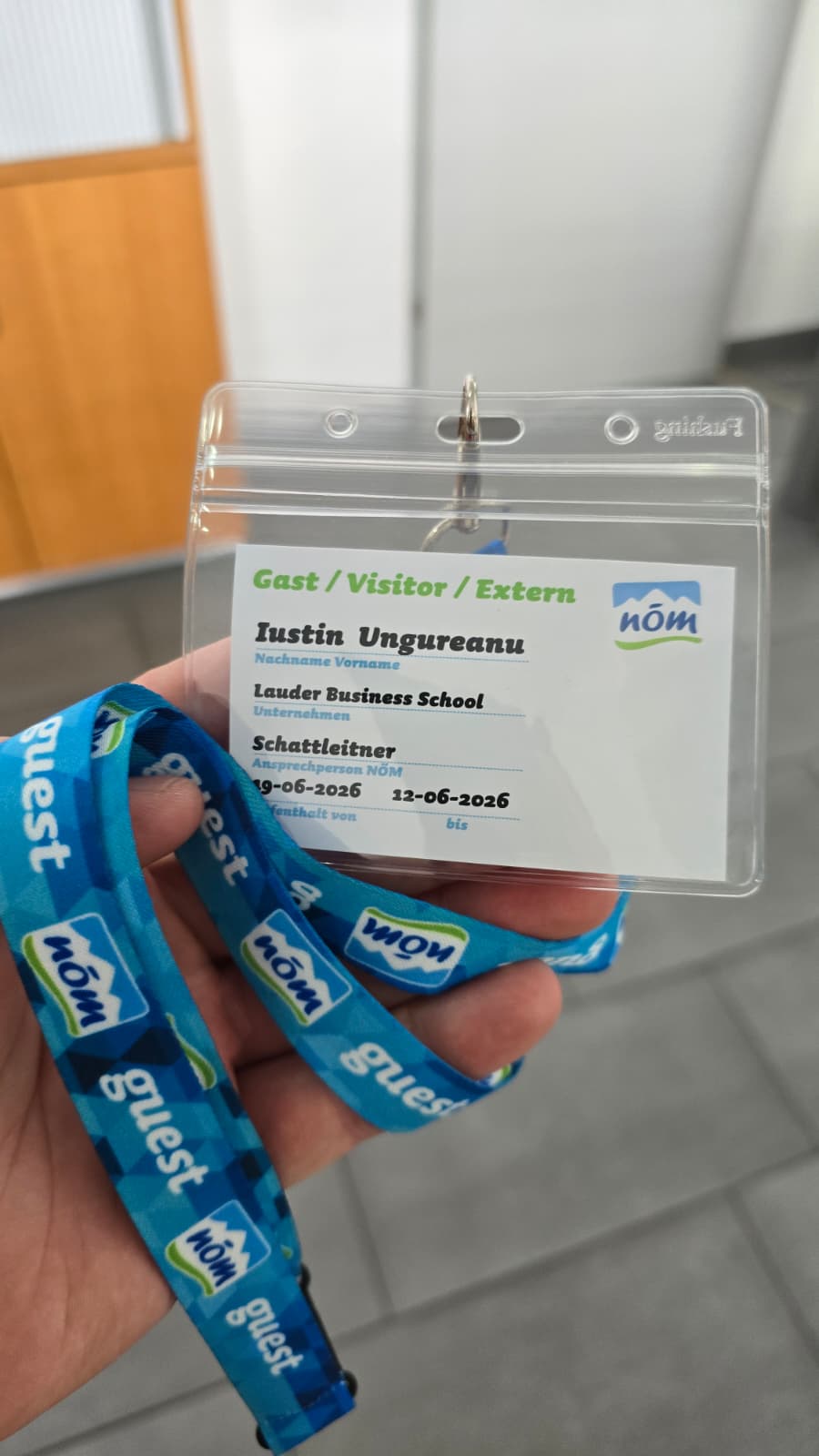

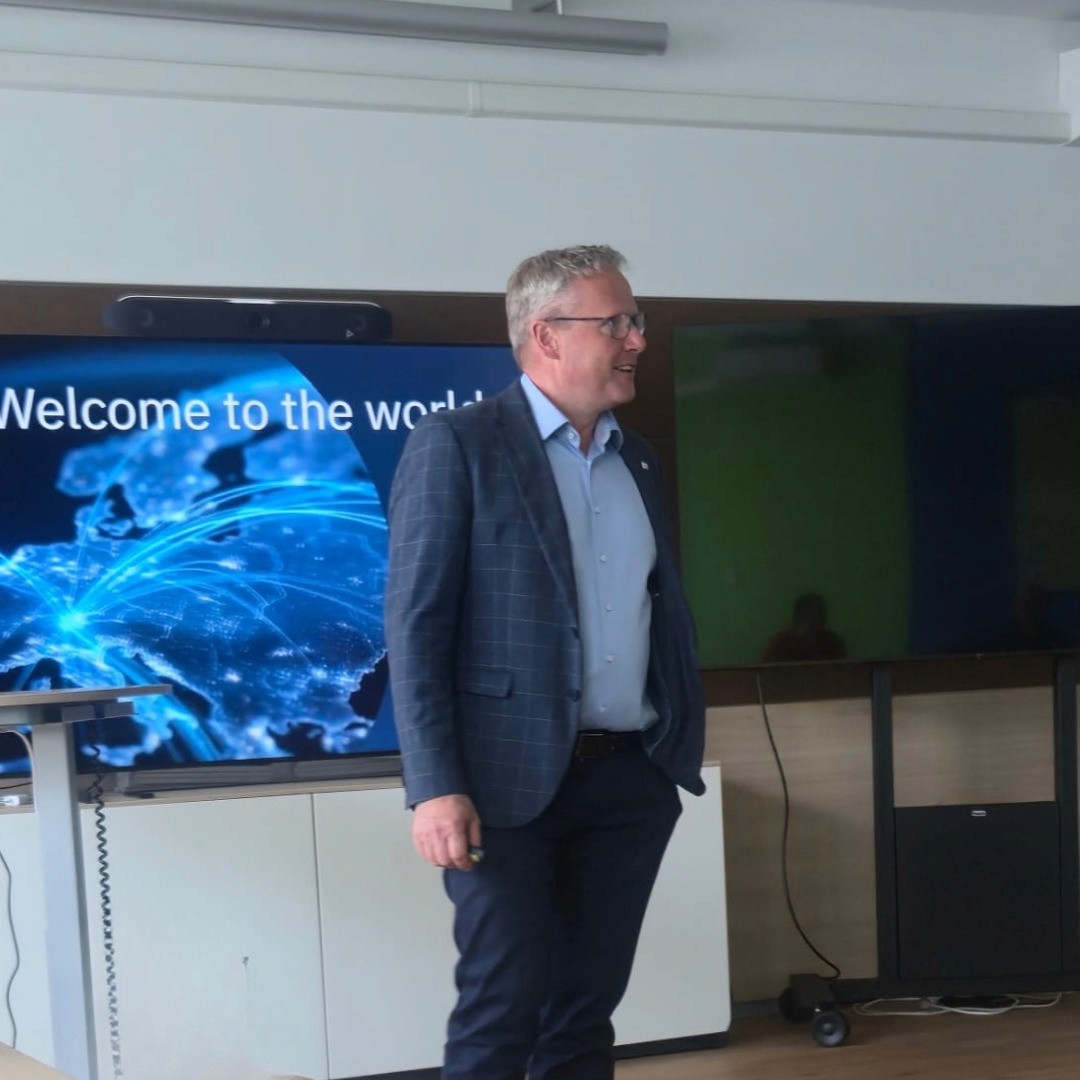
On 12 June, students from the LBS Online MBA students visited the NÖM AG production facility in Baden, just south of Vienna. What followed was a candid, wide-ranging conversation with Mr. Franz Josef Schattleitner, Plant Manager and Head of Supply Chain Management at NÖM AG, and a factory tour to which few external visitors are granted access.
NÖM does not normally open its doors. Space and food safety protocols make tours logistically demanding, and the company guards its production processes carefully. The invitation extended to the LBS Online MBA cohort exemplified the kind of direct industry access that sets Lauder Business School's programs apart and connects academic learning with real-world business practice. What the students encountered inside was a company in the middle of a significant strategic transformation, and the business lessons it surfaced were directly relevant to the topics covered in the program's strategy, operations, and marketing modules.
A 125-Year-Old Company Reinventing Itself
NÖM was founded in Vienna in 1898 and recently celebrated its 125th anniversary. It is currently the second-largest dairy in Austria by both turnover and milk volume, processing 560 million kilograms of milk each year from 2,200 local family farms. Those farms average 25 to 30 cows each, considerably smaller than the industrial-scale operations typical in Germany or the Netherlands, which reflects Austria's distinct agricultural character and the cooperative ownership structure that shapes NÖM's supply chain.
Ownership of NÖM is split between Raiffeisen Holding (63%), MGN Milchgenossenschaft Niederösterreich, one of Austria's major agricultural cooperatives (34%), and Vorarlberg Milch, which holds a 3% stake following its strategic merger and integration into the NÖM Group. It employs 1,200 people representing 33 nationalities and generates 800 million euros in annual revenue.
The most striking thing the plant director communicated was not the scale of those numbers but the deliberate strategic decision behind them. NÖM is in the process of repositioning itself from a traditional dairy into a food solutions company. That shift is not cosmetic. It is reshaping the company's product portfolio, its capital allocation, and its profit model in fundamental ways.
Strategy in Practice: Walking Away from Volume
For the LBS online MBA students learning competitive strategy, the NÖM case offers a textbook illustration of deliberate market repositioning. The company identified that basic drinking milk, while high in volume, was dragging down overall profitability. Margins in commoditised dairy are thin across the industry, and NÖM's response was direct: it reduced its basic drinking milk production from 150 million to under 100 million kilograms and redirected the freed-up milk supply toward higher-value product categories.
The result is a 3% profit margin, which Mr. Schattleitner described as best-in-class in Austria and significantly above the 0.1% average among traditional cooperative dairies. That figure prompted genuine discussion in the group about the relationship between volume, margin, and strategic focus, and about what other sectors exhibit similar dynamics.
For students on an English online MBA weighing the connection between theory and practice, this kind of firsthand account is difficult to replicate through case studies alone. The plant manager's willingness to discuss the financial logic behind the company's strategic choices, openly and with specific numbers, gave the conversation a depth that formal presentations rarely achieve.
Product Innovation: What NÖM Pro Is Actually Made Of
The product innovation discussion was equally instructive. NÖM's growing range of high-protein products, including the NÖM Pro line, collagen drinks, and kefir, is built on a filtration process rather than the protein powder additions common across the industry. By removing water from the milk through filtration, NÖM concentrates the natural protein while achieving a smoother texture. The difference is not merely technical. Products created through natural milk concentration carry a distinct consumer appeal compared with those built around added protein ingredients.
The company is also watching macro health trends closely. Mr. Schattleitner noted that the growing use of Ozempic and similar weight-loss medications, which can accelerate muscle loss, is generating significant consumer demand for muscle-sustaining protein products. NÖM is positioning its longevity product range around this emerging need. The observation was a reminder to the group that product development in food is inseparable from demographic and pharmaceutical trends, and that identifying those intersections ahead of the market is where genuine competitive advantage is built.
NÖM's product portfolio now includes lactose-free cat milk designed for pets, a category that speaks to the diversification of food company revenue streams beyond traditional human nutrition.
The Italian Market: Building a Brand from Zero
Perhaps the session's most discussed case was NÖM's Italian subsidiary, Milk, established in 2009 under an entrepreneurial managing director. The subsidiary has grown from a standing start to nearly 300 million euros in revenue, operated by a team of just 35 people.
The entry strategy was deliberate and staged. NÖM initially produced private-label products for Italian retailers, using those margins to fund the development of its own consumer brand. The brand was named Milk, specifically because the English word is phonetically accessible for Italian speakers, a small but telling example of the kind of market-specific insight that distinguishes successful international launches from generic ones.
Today, NÖM spends over 20 million euros annually on Italian marketing, compared to just 4 to 5 million in Austria, and the Milk brand has achieved market leadership on Italian shelves over competitors like the giant Nestle. The company anticipates the Italian market could eventually exceed 500 million euros in turnover, at which point a local production facility may become necessary.
The Italian case generated significant discussion about international market entry, brand localisation, and the sequencing of investment. It is the kind of real-world example that sits naturally alongside the international business and marketing frameworks covered in the program.
Operations, Sustainability, and the Hyper-Warehouse
The operational dimension of the visit covered the company's new automated warehouse facility, currently under construction at the Baden site. With a starting capacity of 26,000 pallets and the potential to scale to 40,000, the hyper-warehouse represents one of NÖM's most significant capital investments. It will include a direct bridge from the production line into the warehouse and a fully automated truck loading zone.
The facility's design required coordination with UNESCO due to the building's 30-metre height and the need to ensure its visual profile was consistent with the surrounding landscape. The group found this intersection of industrial logistics and heritage planning requirements to be an unexpectedly instructive example of the regulatory and stakeholder dimensions of major infrastructure projects.
On sustainability, NÖM has made several concrete commitments. Its brand PET bottles are made from 100% recycled materials. The new warehouse incorporates 30 kilometres of piping built into the concrete floor, designed to store cold energy generated at night and release it during the day, reducing energy consumption peaks significantly. Production waste water is piped directly to a local community effluent plant rather than treated on site.
The group also discussed NÖM's logistics model, which relies entirely on third-party providers. One example stood out: a route established with an Italian transport partner that delivers NÖM products to Sicily on the outward journey and returns to Vienna loaded with fresh fruit and vegetables from the market, ensuring trucks are never running empty. The efficiency logic is straightforward, but executing it requires the kind of partnership management and route optimisation that the plant manager described as foundational to the company's distribution ecoNÖMics.
Workforce and Labor: An Honest Conversation
The session did not avoid the more difficult aspects of running a large manufacturing operation in Austria. The group discussed the specifics of Austrian labor law in some detail, including the provision for up to eight weeks of fully paid sick leave, the protections afforded by works councils and unions, and the practical and financial implications of these structures for business operations.
NÖM's response has been to invest in workforce quality of life rather than to treat labor costs purely as a line item. Production staff work a structured rotation of two morning shifts, two afternoon shifts, and two night shifts, followed by two or three days off. Heavily subsidised meals, costing workers five euros, are available at the on-site restaurant. A mobile app manages shift communication across the workforce. These are not altruistic choices in isolation: they are part of a deliberate approach to reducing turnover, maintaining productivity, and managing the hidden costs of a high-churn workforce in a competitive labor market.
The Factory Tour
The afternoon concluded with a tour of the production facility. Visitors got equipped with safety shoes and hairnets before entering, to ensure that no human DNA contaminated the milk. The tour gave the group direct exposure to the continuous 24-hour, 365-day production environment Mr. Schattleitner had described, and the scale of the filtration, packaging, and quality control operations was considerably more arresting in person than any diagram could convey.
NÖM operates under rigorous food safety standards, including IFS and BRC certifications. Unannounced audits can run for up to five days, and any major finding results in immediate loss of certification with direct notification to customers. The quality management conversation reinforced the operations module content around certification systems and the real commercial stakes attached to audit outcomes.
Why Industry Access Matters in Business Education
One of the arguments for pursuing business education in Vienna is the proximity it creates to an active, internationally oriented commercial environment. NÖM is one example of a company headquartered in the region whose strategic challenges, operational decisions, and market ambitions are directly relevant to the frameworks students work through in the program. The 12 June visit gave the LBS Online MBA student group access to that environment in a way that translated course content into something visible, specific, and professionally grounded.
The most effective learning in graduate business education tends to happen at the intersection of rigorous frameworks and direct exposure to how decisions are actually made. NÖM provided exactly that.
Students interested in a program that combines internationally focused management education with regular industry engagement can learn more about the LBS Online MBA and the broader range of programs offered at Lauder Business School in Vienna.
Related Blogs