


We demand,
you thrive.

We demand,
you thrive.

Lauder Business School

At Lauder Business School in Vienna, you dont just study business; youre steeped in it. Our internationally accredited programs are built for people who want to move fast and think ahead. While others teach outdated syllabi and recycled case studies, we evolve in real time. We are boutique by choice, so we move faster, adapt quicker, and stay aligned with the world as it actually is. Learn from industry experts from Google, PwC, Microsoft, and Wall Street. Work with tools like Bloomberg, SAP, and SAS. Our AI-integrated, hands-on approach prepares you for real challenges from day one. We dont just teach business, we build careers.Our graduates stand out at companies like Google, Deloitte, Tesla, and more.

At Lauder Business School in Vienna, you dont just study business; youre steeped in it. Our internationally accredited programs are built for people who want to move fast and think ahead. While others teach outdated syllabi and recycled case studies, we evolve in real time. We are boutique by choice, so we move faster, adapt quicker, and stay aligned with the world as it actually is. Learn from industry experts from Google, PwC, Microsoft, and Wall Street. Work with tools like Bloomberg, SAP, and SAS. Our AI-integrated, hands-on approach prepares you for real challenges from day one. We dont just teach business, we build careers.Our graduates stand out at companies like Google, Deloitte, Tesla, and more.

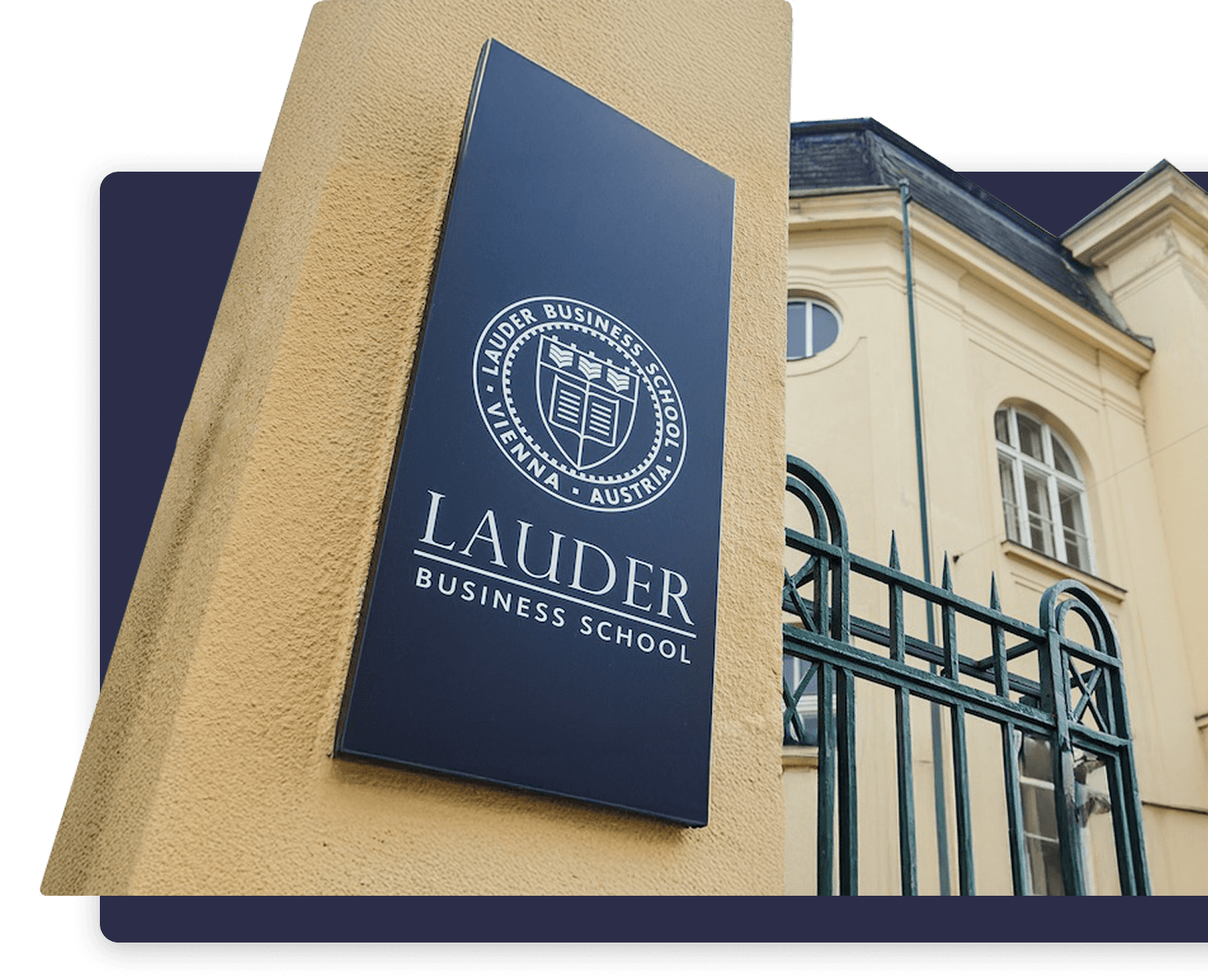
Lauder Business School Entrance & Main Awards
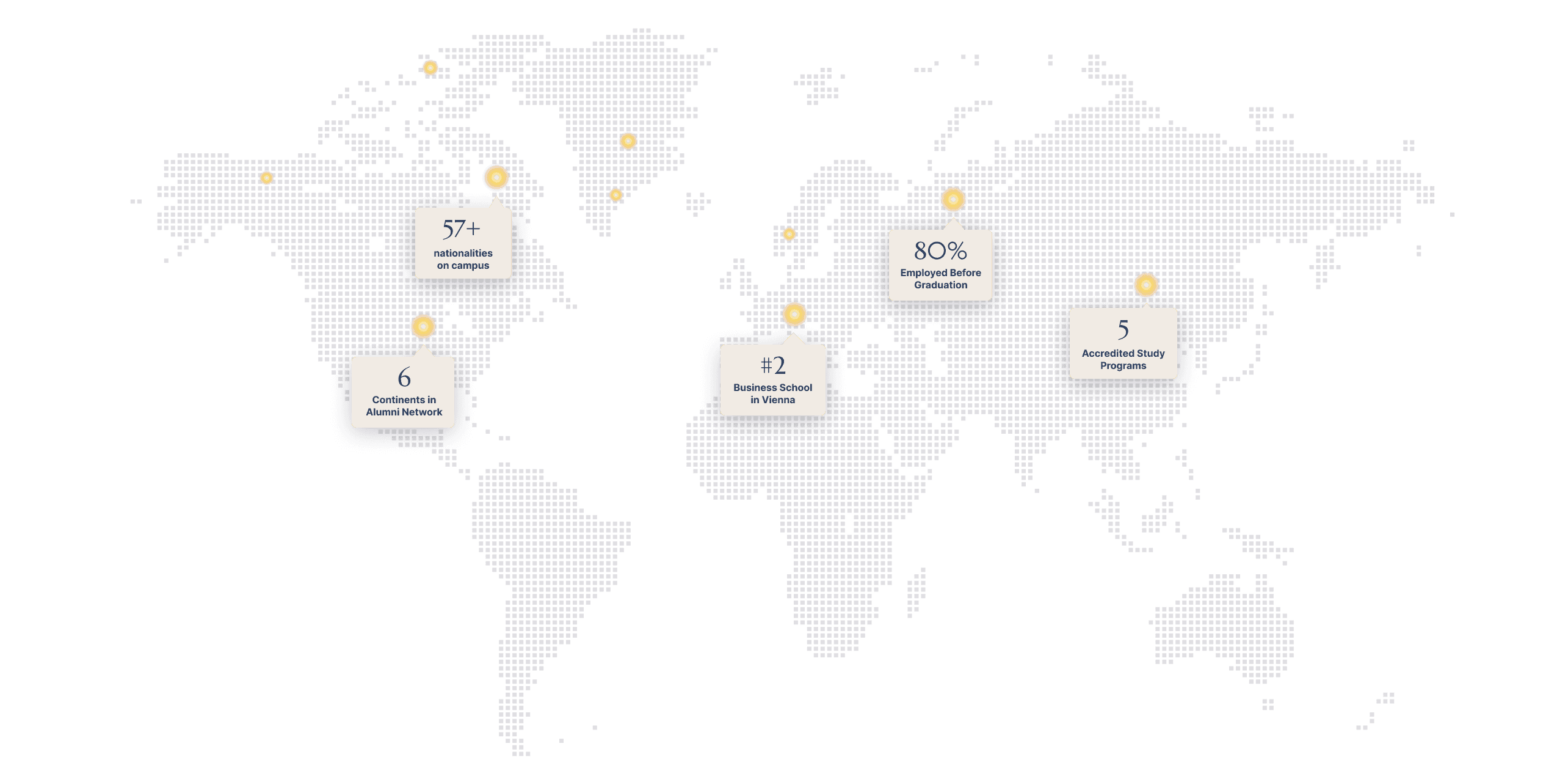
International environment, 80% employment rate after graduation, and 3 accredited study programs
Events at Lauder Business School

The economy moves. We move faster.

The economy moves.
We move faster.

At Lauder Business School in Austria, a leading business school in Europe, we don’t follow change; we stay ahead of it. Our English-taught programs within the European higher education framework combine academic excellence with real-world application and AI-integrated courses. Taught by real-world practitioners, seasoned industry leaders, and academic authorities, students engage in a rigorous, hands-on learning experience built on real-world business projects.

Students build strong foundations in management, economics, finance, marketing, and leadership, developing the mindset and skills to act, adapt, and lead in fast-moving global markets. Our graduates don’t just enter the job market; they stand out, joining top companies like Google, PwC, Deloitte, Tesla, X, and more.

At Lauder Business School in Austria, a leading business school in Europe, we don’t follow change; we stay ahead of it. Our English-taught programs within the European higher education framework combine academic excellence with real-world application and AI-integrated courses. Taught by real-world practitioners, seasoned industry leaders, and academic authorities, students engage in a rigorous, hands-on learning experience built on real-world business projects.

Students build strong foundations in management, economics, finance, marketing, and leadership, developing the mindset and skills to act, adapt, and lead in fast-moving global markets. Our graduates don’t just enter the job market; they stand out, joining top companies like Google, PwC, Deloitte, Tesla, X, and more.

Full Time on Campus

LBS programs deliver a powerful foundation in management, economics, and leadership, preparing you to compete and lead across both European and global markets. Our advanced AI-driven curriculum equips you with hands-on experience in data analysis, supply chain optimization, and critical evaluation of AI systems, ensuring you graduate ready to lead in an economy defined by intelligent technology.

LBS programs deliver a powerful foundation in management, economics, and leadership, preparing you to compete and lead across both European and global markets. Our advanced AI-driven curriculum equips you with hands-on experience in data analysis, supply chain optimization, and critical evaluation of AI systems, ensuring you graduate ready to lead in an economy defined by intelligent technology.

International Business Administration

A globally focused bachelor’s degree combining core business knowledge with practical experience. It prepares students for international careers in management, finance, and marketing.
Bachelor, BA

Strategic Finance & Business Analytics

A specialized Master's degree integrating strategic finance with data-driven business analytics. Graduates gain the skills to make informed financial, data-driven, and strategic decisions.
Master, MA

International Management and Leadership

This Master's program by LBS develops strategic thinkers and future leaders for international business environments. It combines advanced management theory with real-world application.
Master, MA

Online Programs

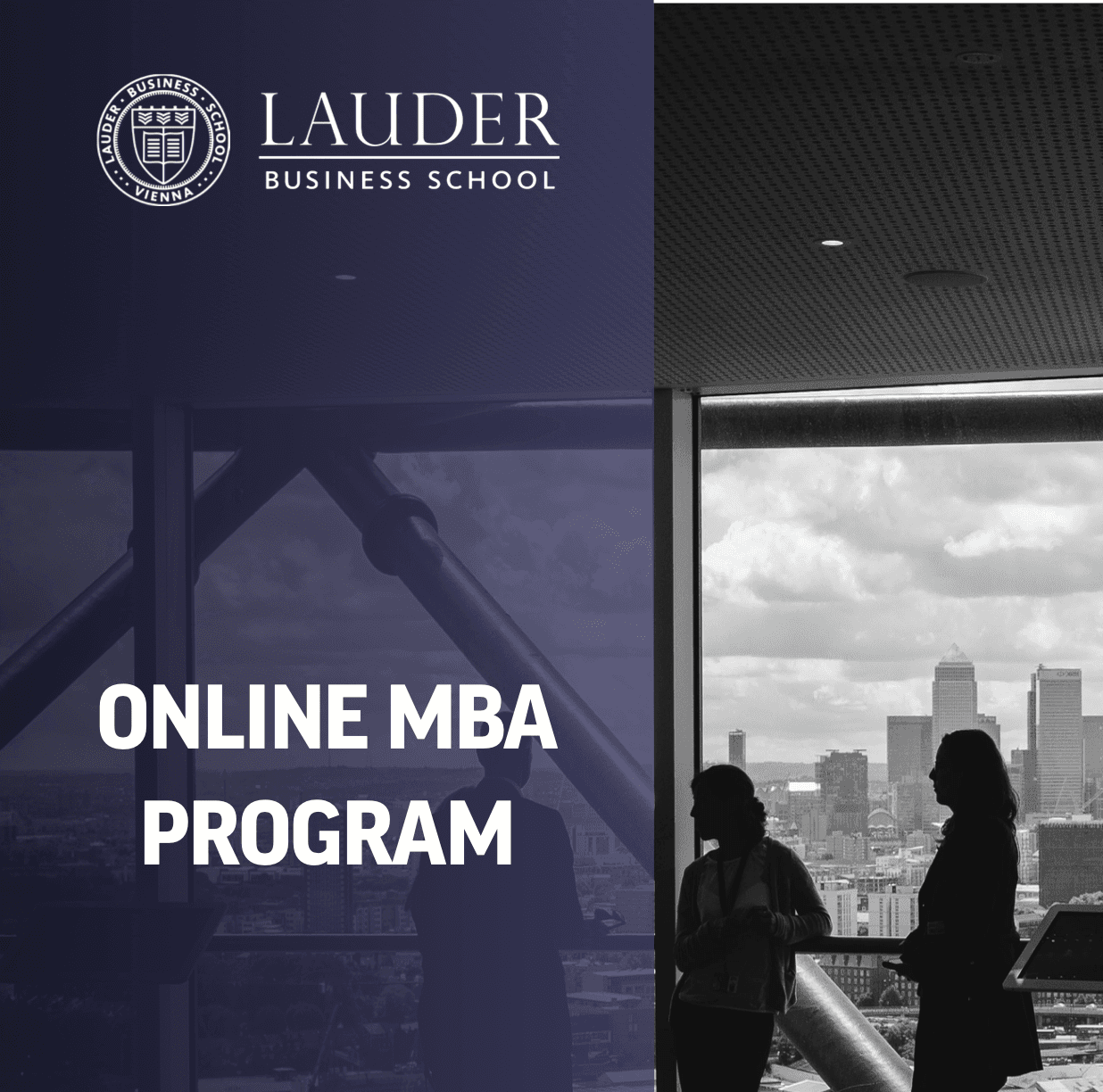
Flexible executive and professional Business Administration programs. Apply for our international online programs, aligned with American standards and built around the value of practical experience. With no GMAT or admissions test required, you can seamlessly join a program designed to prepare you for leadership roles across industries and organizations of every scale.

Online

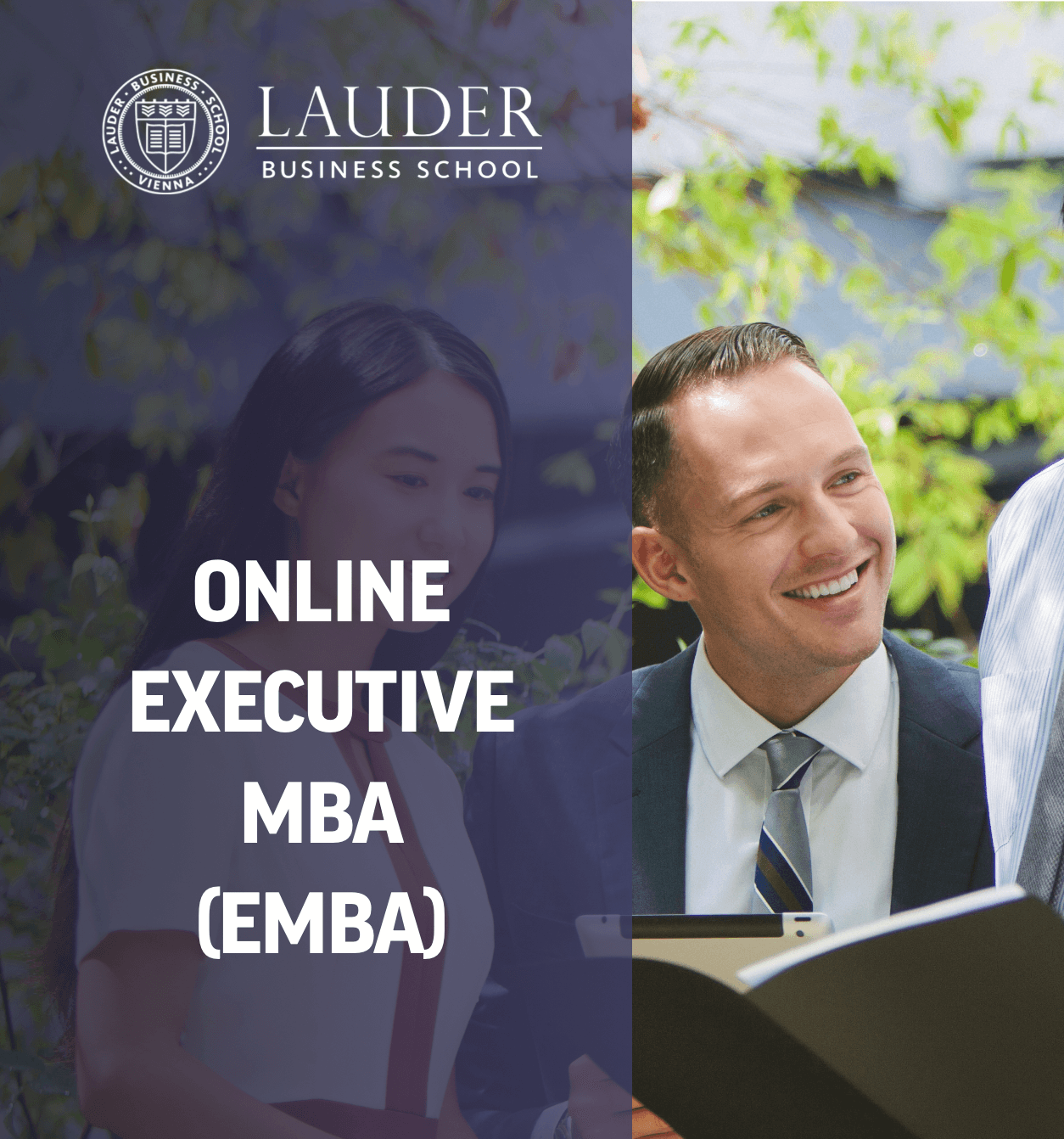
A next-generation program for ambitious professionals who refuse to stand still. This flexible, fully online program reimagines business education through cutting-edge technologies, advanced digital tools, and real-world applications.

Blending strategy, leadership, and data-driven insights, it sharpens your global business acumen and empowers you to lead with confidence, accelerate innovation, and drive measurable impact wherever you are.

Online

A future-ready program for leaders who refuse to play it safe. Built for experienced professionals ready to claim their place at the top, this program sharpens bold decision-making through cutting-edge tools, data-driven insight, and real-world execution.

Fusing advanced leadership with global strategy, it pushes you to challenge conventions, lead with authority, and drive transformation at the highest levels.


One of our events
Lauder Business School campus
Our merchandise

Why Lauder Business School?

Why Lauder Business School?

AI and technology are changing business fast, but what matters most is how people think and decide. We help our students develop that judgment.

AI and technology are changing business fast, but what matters most is how people think and decide. We help our students develop that judgment.

Lauder Business School in Austria is the only university of Applied Sciences in Europe offering Jewish students from all over the world a campus that provides a safe environment as well as a vibrant, joyful academic experience away from home.

As one of the leading business schools, we deliver a forward-thinking approach to business education, one that goes beyond theory to shape impactful careers. We empower our students to deepen their expertise in today’s most dynamic business fields while cultivating the strategic mindset, leadership capabilities, and entrepreneurial drive required to excel as tomorrow’s executives, innovators, and change-makers.

Lauder Business School in Austria is the only university of Applied Sciences in Europe offering Jewish students from all over the world a campus that provides a safe environment as well as a vibrant, joyful academic experience away from home.

As one of the leading business schools, we deliver a forward-thinking approach to business education, one that goes beyond theory to shape impactful careers. We empower our students to deepen their expertise in today’s most dynamic business fields while cultivating the strategic mindset, leadership capabilities, and entrepreneurial drive required to excel as tomorrow’s executives, innovators, and change-makers.

Lauder Business School in Austria is the only university of Applied Sciences in Europe offering Jewish students from all over the world a campus that provides a safe environment as well as a vibrant, joyful academic experience away from home.

As one of the leading business schools, we deliver a forward-thinking approach to business education, one that goes beyond theory to shape impactful careers. We empower our students to deepen their expertise in today’s most dynamic business fields while cultivating the strategic mindset, leadership capabilities, and entrepreneurial drive required to excel as tomorrow’s executives, innovators, and change-makers.

Ronald Lauder

President

President

Ronald Lauder

As one of the best business schools in Europe, we don’t adapt to the future of business - we define it. Shaping our students into the executives, leaders, and entrepreneurs who lead what comes next.

  • European Business Education at high American standards

  • Connect with the Bloomberg Professional Services

  • Fixed duration — finish your studies in 2 or 3 years

  • Be in-demand: approx. 80% of graduates find top jobs within 4 months of graduating

  • Grow your international network with 47+ different nationalities on campus

As one of the best business schools in Europe, we don’t adapt to the future of business - we define it. Shaping our students into the executives, leaders, and entrepreneurs who lead what comes next.

  • European Business Education at high American standards

  • Connect with the Bloomberg Professional Services

  • Fixed duration — finish your studies in 2 or 3 years

  • Be in-demand: approx. 80% of graduates find top jobs within 4 months of graduating

  • Grow your international network with 47+ different nationalities on campus

Our Partners

Boston University
Longwood University Logo
Saint Martin's University Logo
Westcliff University
Reichman University Logo
Ben-Gurion University of the Negev Logo
Bar Ilan University Logo
FH Oberösterreich Logo
UPAEP Logo
Wiener Städtische Logo
RHI Logo
European Maccabi Games Logo
Erasmus+ Logo
Ukrainian Academy of Banking of the National Bank of Ukraine Logo
Heirri Logo
PWC Logo
Bank Austria Logo
CFA Institute
Boston University
Longwood University Logo
Saint Martin's University Logo
Westcliff University
Reichman University Logo
Ben-Gurion University of the Negev Logo
Bar Ilan University Logo
FH Oberösterreich Logo
UPAEP Logo
Wiener Städtische Logo
RHI Logo
European Maccabi Games Logo
Erasmus+ Logo
Ukrainian Academy of Banking of the National Bank of Ukraine Logo
Heirri Logo
PWC Logo
Bank Austria Logo
CFA Institute
Boston University
Longwood University Logo
Saint Martin's University Logo
Westcliff University
Reichman University Logo
Ben-Gurion University of the Negev Logo
Bar Ilan University Logo
FH Oberösterreich Logo
UPAEP Logo
Wiener Städtische Logo
RHI Logo
European Maccabi Games Logo
Erasmus+ Logo
Ukrainian Academy of Banking of the National Bank of Ukraine Logo
Heirri Logo
PWC Logo
Bank Austria Logo
CFA Institute
Boston University
Longwood University Logo
Saint Martin's University Logo
Westcliff University
Reichman University Logo
Ben-Gurion University of the Negev Logo
Bar Ilan University Logo
FH Oberösterreich Logo
UPAEP Logo
Wiener Städtische Logo
RHI Logo
European Maccabi Games Logo
Erasmus+ Logo
Ukrainian Academy of Banking of the National Bank of Ukraine Logo
Heirri Logo
PWC Logo
Bank Austria Logo
CFA Institute
Boston University
Longwood University Logo
Saint Martin's University Logo
Westcliff University
Reichman University Logo
Ben-Gurion University of the Negev Logo
Bar Ilan University Logo
FH Oberösterreich Logo
UPAEP Logo
Wiener Städtische Logo
RHI Logo
European Maccabi Games Logo
Erasmus+ Logo
Ukrainian Academy of Banking of the National Bank of Ukraine Logo
Heirri Logo
PWC Logo
Bank Austria Logo
CFA Institute
Boston University
Longwood University Logo
Saint Martin's University Logo
Westcliff University
Reichman University Logo
Ben-Gurion University of the Negev Logo
Bar Ilan University Logo
FH Oberösterreich Logo
UPAEP Logo
Wiener Städtische Logo
RHI Logo
European Maccabi Games Logo
Erasmus+ Logo
Ukrainian Academy of Banking of the National Bank of Ukraine Logo
Heirri Logo
PWC Logo
Bank Austria Logo
CFA Institute
Boston University
Longwood University Logo
Saint Martin's University Logo
Westcliff University
Reichman University Logo
Ben-Gurion University of the Negev Logo
Bar Ilan University Logo
FH Oberösterreich Logo
UPAEP Logo
Wiener Städtische Logo
RHI Logo
European Maccabi Games Logo
Erasmus+ Logo
Ukrainian Academy of Banking of the National Bank of Ukraine Logo
Heirri Logo
PWC Logo
Bank Austria Logo
CFA Institute
Boston University
Longwood University Logo
Saint Martin's University Logo
Westcliff University
Reichman University Logo
Ben-Gurion University of the Negev Logo
Bar Ilan University Logo
FH Oberösterreich Logo
UPAEP Logo
Wiener Städtische Logo
RHI Logo
European Maccabi Games Logo
Erasmus+ Logo
Ukrainian Academy of Banking of the National Bank of Ukraine Logo
Heirri Logo
PWC Logo
Bank Austria Logo
CFA Institute
Boston University
Longwood University Logo
Saint Martin's University Logo
Westcliff University
Reichman University Logo
Ben-Gurion University of the Negev Logo
Bar Ilan University Logo
FH Oberösterreich Logo
UPAEP Logo
Wiener Städtische Logo
RHI Logo
European Maccabi Games Logo
Erasmus+ Logo
Ukrainian Academy of Banking of the National Bank of Ukraine Logo
Heirri Logo
PWC Logo
Bank Austria Logo
CFA Institute

Latest News

Jul 10, 2026

MBA vs Executive MBA: Which Degree Is Right for Your Career Stage in 2026? Demand for graduate business education has continued to grow among professionals at every stage of their careers, driven by the increasing complexity of international markets, the pace of technological change, and the expectation that leadership development is a continuous rather than a one-time investment. For many professionals, however, the first practical question is not whether to study but which qualification to pursue. The comparison between an MBA and an Executive MBA is one of the most common decision points in graduate business education, and it is frequently misunderstood. These are not competing products aimed at the same audience. They are designed for professionals at different points in their careers, with different objectives, different peer environments, and different relationships to the organisations they work in. Understanding those differences clearly is the most useful starting point for making the right choice. What Is an MBA? A Master of Business Administration is a graduate business degree designed to develop broad management capability across finance, strategy, marketing, operations, and leadership. It is typically pursued by professionals in the early to mid-stages of their careers, most commonly between the ages of 25 and 35, with roughly two to seven years of professional experience. The MBA attracts a wide range of candidate profiles. Career changers use it to move from a technical or specialist background into management roles. Young managers use it to accelerate progression within their existing field. Entrepreneurs use it to build the financial and operational foundations their ventures require. International professionals use it to build the cross-cultural business fluency and credential recognition that global careers demand. Study formats have diversified considerably. Full-time programs offer immersive campus-based learning over one to two years. Part-time formats allow students to remain employed while studying, typically over two to three years. Online programs extend access to working professionals who cannot relocate or step away from their roles. Each format involves different trade-offs between depth of immersion, flexibility, cost, and professional continuity. A question professionals in this window often raise is whether they should wait until they hold a more senior position before pursuing graduate business education. The case for acting earlier is straightforward. The strategic and financial frameworks an MBA provides compound in value when applied across a longer career trajectory; a professional who develops those skills at 30 enters their most formative management years with a meaningfully stronger foundation. The peer network built during early to mid-career study also grows in seniority and influence over time, becoming more professionally valuable precisely because it was formed early. Deferring an MBA until executive level means pursuing a qualification that, by that point, would more closely resemble the EMBA profile it was designed to precede. For professionals who need to continue working while they study, an online format is often the most practical entry point. The LBS Online MBA is designed specifically around this profile: a self-paced, fully online program taught in English with flexible monthly intake and no requirement to interrupt a professional career. What Is an Executive MBA (EMBA)? An Executive MBA is a graduate management qualification built specifically for senior managers, experienced executives, business owners, and professionals who are already leading teams, departments, or organisations. It is not a stepping stone toward leadership; it is a program for people who are already there. The typical EMBA participant is between 35 and 50 years of age, with eight to fifteen or more years of professional experience, and holds a director, department head, senior manager, or business owner title at the time of enrollment. Many are already running significant parts of an organisation and are seeking the strategic and governance frameworks to perform that role more effectively, not a credential that signals readiness for responsibility they already carry. The EMBA curriculum differs from a standard MBA in its orientation. Where an MBA builds broad foundational management knowledge, an Executive MBA focuses on strategic decision-making, governance, organisational transformation, and executive leadership. The assumption is that participants already understand the mechanics of business and are ready to engage with the more complex, ambiguous challenges that senior roles involve. EMBA programs are typically structured around weekend or modular formats that allow participants to maintain their roles throughout the program. Employer sponsorship is common, since organisations frequently see the development of their senior leaders as a direct investment in the business. The peer learning dimension is also distinctive: a cohort of senior professionals with diverse sector and functional backgrounds generates a quality of peer exchange that is different in character from that of a more junior MBA cohort. Among the institutions offering well-regarded EMBA programs in Europe, WU Executive Academy provides a strong option for professionals with deep ties to the Austrian and Central European business environment. INSEAD's EMBA is one of the most internationally recognised in the world, attracting senior executives from across sectors and geographies. IE Business School and ESCP both offer structured EMBA programs with strong European market positioning and international delivery components. MBA vs Executive MBA: Key Differences The table below summarises the main structural and profile differences between the two qualifications. Factor MBA Executive MBA (EMBA) Typical age range 25 to 35 35 to 50+ Work experience 2 to 7 years 8 to 15+ years Career stage Early to mid-career Senior leadership Study format Full-time, part-time, online Weekend, modular Leadership focus Foundational to moderate Advanced and strategic Peer network Diverse professionals Senior executives Employer sponsorship Less common Frequently employer-sponsored Primary goal Career acceleration or transition Executive advancement The most important column to read is the career stage row. If you are looking to accelerate or redirect your career from an early or mid-level position, an MBA is the more appropriate qualification. If you are already operating at a senior level and want to deepen your strategic leadership capability, an Executive MBA is the better fit. The distinction is about career stage, not about which qualification is more prestigious. Who Should Choose an MBA? An MBA is worth considering if you are in one of the following situations: • You are changing industries or functions and need a qualification that builds credibility in a new domain and opens access to relevant employers and networks. • You are an early or mid-level manager looking to accelerate your progression into senior roles and want the strategic and financial frameworks that MBA programs provide. • You are building or planning to build a venture and want the operational, financial, and leadership foundations to do so more effectively. • You are an international professional looking for an English-language qualification with recognized accreditation that travels well across markets. • You are a specialist, in engineering, technology, law, or medicine, moving into management and needing a credential that signals that transition to employers. The MBA format you choose will depend on your practical circumstances as much as your professional goals. Full-time programs offer the most immersive experience but require stepping away from employment. Online programs are often the most financially sustainable option for candidates who need to continue earning and building professional experience simultaneously. Who Should Choose an Executive MBA? An Executive MBA is the more appropriate choice if you are already operating at or near a senior level and your primary objective is to deepen your strategic leadership capability rather than to build foundational management knowledge. Typical EMBA candidates include: • Department heads and directors who are preparing for broader executive responsibility and want to develop the strategic and governance frameworks that C-suite roles require. • Senior consultants and advisors who are moving into principal or partner-level positions and need to strengthen their executive leadership perspective. • Business owners who have built and run their organisations and want to take a structured, rigorous look at strategy, international expansion, or succession planning. • High-potential professionals identified by their organisations as future executive leaders and sponsored to pursue development at an accelerated pace. The peer environment in an EMBA program is one of its most valuable features. Studying alongside other senior professionals from diverse sectors and functions generates a quality of discussion and cross-pollination of experience that is genuinely different from earlier-career cohort dynamics. Many EMBA participants cite peer relationships as among the most enduring professional outcomes of the program. Is an Online MBA a Strong Alternative for Working Professionals? For many professionals, particularly those who cannot relocate, do not want to interrupt their careers, or are managing significant financial and personal commitments alongside their studies, an online MBA represents a credible and increasingly well-regarded path. Employer perception of online business education has shifted substantially, particularly in the years since 2020. Accredited programs from recognised institutions are evaluated by most employers on the basis of the institution's credentials and the graduate's demonstrated capability, not the delivery format. The key variables are accreditation status, faculty quality, and career support infrastructure rather than whether the program was delivered online or on campus. Online programs also offer a practical advantage that is worth stating directly: they allow students to apply what they are learning in real time. A professional who is studying financial strategy in the evening and making financial decisions in their role the following morning accumulates a different kind of learning than one who is studying in isolation from active professional practice. The LBS Online MBA is structured around this principle. It is taught in English by faculty drawn predominantly from active industry roles, admits students on a rolling monthly basis, and is designed to fit around full-time employment. It is not an alternative to senior executive development; it is a route to the management credential and skills foundation that positions professionals for the next stage of their careers. Frequently Asked Questions Is an MBA or an Executive MBA more respected by employers? Both are respected when issued by accredited institutions. The more relevant question is which qualification matches the candidate's career stage and objective. Employers evaluating an MBA graduate expect a strong foundation in management principles and the potential for growth into leadership roles. Employers evaluating an EMBA graduate expect strategic leadership capability and executive-level judgment built on significant professional experience. Neither is inherently more prestigious; they signal different things about different candidate profiles. Can I pursue an MBA or EMBA while remaining in my current role? Yes, depending on the format. Part-time and online MBA programs are designed for working professionals. Executive MBA programs are specifically structured to be completed alongside full-time senior employment, typically through weekend or modular formats. Full-time MBA programs are the exception, as they generally require stepping away from employment for the duration of the program. The LBS Online MBA is fully compatible with continued employment and has no requirement to relocate or reduce professional commitments. How do I know which program is right for my career stage? The clearest indicator is your current level of professional experience and the specific career outcome you are working toward. If you have fewer than seven or eight years of experience and are looking to accelerate your progression or change direction, an MBA is likely the more appropriate starting point. If you have a decade or more of experience and are preparing for or already operating at senior level, an EMBA is worth investigating. Speaking directly with admissions advisors at institutions you are considering is the most reliable way to get an honest assessment of fit. The LBS admissions and career support team can provide guidance on whether the Online MBA aligns with your professional profile and goals. Conclusion: Choosing the Degree That Fits Your Career Stage An MBA and an Executive MBA are not versions of the same qualification at different price points. They are designed for distinct career stages, different learning objectives, and different professional contexts. The choice between them is, at its core, a question of where you are in your career and what the next stage requires of you. For professionals in the early to mid-stages of their careers, an MBA provides the broad management foundation, credential recognition, and professional network to accelerate progression or navigate a significant career transition. For experienced senior professionals, an Executive MBA builds on an already substantial career with the strategic leadership frameworks and executive peer environment that the next level of responsibility demands. Online formats have added a third practical dimension: the ability to pursue management education alongside continued professional activity, without the financial and logistical disruption of a full-time program. For the right candidate, this is not a compromise but a genuine fit. Professionals considering their options can explore the LBS MBA program and the Online MBA to assess whether either aligns with their career stage and objectives.

Jul 10, 2026

MBA vs Executive MBA: Which Degree Is Right for Your Career Stage in 2026? Demand for graduate business education has continued to grow among professionals at every stage of their careers, driven by the increasing complexity of international markets, the pace of technological change, and the expectation that leadership development is a continuous rather than a one-time investment. For many professionals, however, the first practical question is not whether to study but which qualification to pursue. The comparison between an MBA and an Executive MBA is one of the most common decision points in graduate business education, and it is frequently misunderstood. These are not competing products aimed at the same audience. They are designed for professionals at different points in their careers, with different objectives, different peer environments, and different relationships to the organisations they work in. Understanding those differences clearly is the most useful starting point for making the right choice. What Is an MBA? A Master of Business Administration is a graduate business degree designed to develop broad management capability across finance, strategy, marketing, operations, and leadership. It is typically pursued by professionals in the early to mid-stages of their careers, most commonly between the ages of 25 and 35, with roughly two to seven years of professional experience. The MBA attracts a wide range of candidate profiles. Career changers use it to move from a technical or specialist background into management roles. Young managers use it to accelerate progression within their existing field. Entrepreneurs use it to build the financial and operational foundations their ventures require. International professionals use it to build the cross-cultural business fluency and credential recognition that global careers demand. Study formats have diversified considerably. Full-time programs offer immersive campus-based learning over one to two years. Part-time formats allow students to remain employed while studying, typically over two to three years. Online programs extend access to working professionals who cannot relocate or step away from their roles. Each format involves different trade-offs between depth of immersion, flexibility, cost, and professional continuity. A question professionals in this window often raise is whether they should wait until they hold a more senior position before pursuing graduate business education. The case for acting earlier is straightforward. The strategic and financial frameworks an MBA provides compound in value when applied across a longer career trajectory; a professional who develops those skills at 30 enters their most formative management years with a meaningfully stronger foundation. The peer network built during early to mid-career study also grows in seniority and influence over time, becoming more professionally valuable precisely because it was formed early. Deferring an MBA until executive level means pursuing a qualification that, by that point, would more closely resemble the EMBA profile it was designed to precede. For professionals who need to continue working while they study, an online format is often the most practical entry point. The LBS Online MBA is designed specifically around this profile: a self-paced, fully online program taught in English with flexible monthly intake and no requirement to interrupt a professional career. What Is an Executive MBA (EMBA)? An Executive MBA is a graduate management qualification built specifically for senior managers, experienced executives, business owners, and professionals who are already leading teams, departments, or organisations. It is not a stepping stone toward leadership; it is a program for people who are already there. The typical EMBA participant is between 35 and 50 years of age, with eight to fifteen or more years of professional experience, and holds a director, department head, senior manager, or business owner title at the time of enrollment. Many are already running significant parts of an organisation and are seeking the strategic and governance frameworks to perform that role more effectively, not a credential that signals readiness for responsibility they already carry. The EMBA curriculum differs from a standard MBA in its orientation. Where an MBA builds broad foundational management knowledge, an Executive MBA focuses on strategic decision-making, governance, organisational transformation, and executive leadership. The assumption is that participants already understand the mechanics of business and are ready to engage with the more complex, ambiguous challenges that senior roles involve. EMBA programs are typically structured around weekend or modular formats that allow participants to maintain their roles throughout the program. Employer sponsorship is common, since organisations frequently see the development of their senior leaders as a direct investment in the business. The peer learning dimension is also distinctive: a cohort of senior professionals with diverse sector and functional backgrounds generates a quality of peer exchange that is different in character from that of a more junior MBA cohort. Among the institutions offering well-regarded EMBA programs in Europe, WU Executive Academy provides a strong option for professionals with deep ties to the Austrian and Central European business environment. INSEAD's EMBA is one of the most internationally recognised in the world, attracting senior executives from across sectors and geographies. IE Business School and ESCP both offer structured EMBA programs with strong European market positioning and international delivery components. MBA vs Executive MBA: Key Differences The table below summarises the main structural and profile differences between the two qualifications. Factor MBA Executive MBA (EMBA) Typical age range 25 to 35 35 to 50+ Work experience 2 to 7 years 8 to 15+ years Career stage Early to mid-career Senior leadership Study format Full-time, part-time, online Weekend, modular Leadership focus Foundational to moderate Advanced and strategic Peer network Diverse professionals Senior executives Employer sponsorship Less common Frequently employer-sponsored Primary goal Career acceleration or transition Executive advancement The most important column to read is the career stage row. If you are looking to accelerate or redirect your career from an early or mid-level position, an MBA is the more appropriate qualification. If you are already operating at a senior level and want to deepen your strategic leadership capability, an Executive MBA is the better fit. The distinction is about career stage, not about which qualification is more prestigious. Who Should Choose an MBA? An MBA is worth considering if you are in one of the following situations: • You are changing industries or functions and need a qualification that builds credibility in a new domain and opens access to relevant employers and networks. • You are an early or mid-level manager looking to accelerate your progression into senior roles and want the strategic and financial frameworks that MBA programs provide. • You are building or planning to build a venture and want the operational, financial, and leadership foundations to do so more effectively. • You are an international professional looking for an English-language qualification with recognized accreditation that travels well across markets. • You are a specialist, in engineering, technology, law, or medicine, moving into management and needing a credential that signals that transition to employers. The MBA format you choose will depend on your practical circumstances as much as your professional goals. Full-time programs offer the most immersive experience but require stepping away from employment. Online programs are often the most financially sustainable option for candidates who need to continue earning and building professional experience simultaneously. Who Should Choose an Executive MBA? An Executive MBA is the more appropriate choice if you are already operating at or near a senior level and your primary objective is to deepen your strategic leadership capability rather than to build foundational management knowledge. Typical EMBA candidates include: • Department heads and directors who are preparing for broader executive responsibility and want to develop the strategic and governance frameworks that C-suite roles require. • Senior consultants and advisors who are moving into principal or partner-level positions and need to strengthen their executive leadership perspective. • Business owners who have built and run their organisations and want to take a structured, rigorous look at strategy, international expansion, or succession planning. • High-potential professionals identified by their organisations as future executive leaders and sponsored to pursue development at an accelerated pace. The peer environment in an EMBA program is one of its most valuable features. Studying alongside other senior professionals from diverse sectors and functions generates a quality of discussion and cross-pollination of experience that is genuinely different from earlier-career cohort dynamics. Many EMBA participants cite peer relationships as among the most enduring professional outcomes of the program. Is an Online MBA a Strong Alternative for Working Professionals? For many professionals, particularly those who cannot relocate, do not want to interrupt their careers, or are managing significant financial and personal commitments alongside their studies, an online MBA represents a credible and increasingly well-regarded path. Employer perception of online business education has shifted substantially, particularly in the years since 2020. Accredited programs from recognised institutions are evaluated by most employers on the basis of the institution's credentials and the graduate's demonstrated capability, not the delivery format. The key variables are accreditation status, faculty quality, and career support infrastructure rather than whether the program was delivered online or on campus. Online programs also offer a practical advantage that is worth stating directly: they allow students to apply what they are learning in real time. A professional who is studying financial strategy in the evening and making financial decisions in their role the following morning accumulates a different kind of learning than one who is studying in isolation from active professional practice. The LBS Online MBA is structured around this principle. It is taught in English by faculty drawn predominantly from active industry roles, admits students on a rolling monthly basis, and is designed to fit around full-time employment. It is not an alternative to senior executive development; it is a route to the management credential and skills foundation that positions professionals for the next stage of their careers. Frequently Asked Questions Is an MBA or an Executive MBA more respected by employers? Both are respected when issued by accredited institutions. The more relevant question is which qualification matches the candidate's career stage and objective. Employers evaluating an MBA graduate expect a strong foundation in management principles and the potential for growth into leadership roles. Employers evaluating an EMBA graduate expect strategic leadership capability and executive-level judgment built on significant professional experience. Neither is inherently more prestigious; they signal different things about different candidate profiles. Can I pursue an MBA or EMBA while remaining in my current role? Yes, depending on the format. Part-time and online MBA programs are designed for working professionals. Executive MBA programs are specifically structured to be completed alongside full-time senior employment, typically through weekend or modular formats. Full-time MBA programs are the exception, as they generally require stepping away from employment for the duration of the program. The LBS Online MBA is fully compatible with continued employment and has no requirement to relocate or reduce professional commitments. How do I know which program is right for my career stage? The clearest indicator is your current level of professional experience and the specific career outcome you are working toward. If you have fewer than seven or eight years of experience and are looking to accelerate your progression or change direction, an MBA is likely the more appropriate starting point. If you have a decade or more of experience and are preparing for or already operating at senior level, an EMBA is worth investigating. Speaking directly with admissions advisors at institutions you are considering is the most reliable way to get an honest assessment of fit. The LBS admissions and career support team can provide guidance on whether the Online MBA aligns with your professional profile and goals. Conclusion: Choosing the Degree That Fits Your Career Stage An MBA and an Executive MBA are not versions of the same qualification at different price points. They are designed for distinct career stages, different learning objectives, and different professional contexts. The choice between them is, at its core, a question of where you are in your career and what the next stage requires of you. For professionals in the early to mid-stages of their careers, an MBA provides the broad management foundation, credential recognition, and professional network to accelerate progression or navigate a significant career transition. For experienced senior professionals, an Executive MBA builds on an already substantial career with the strategic leadership frameworks and executive peer environment that the next level of responsibility demands. Online formats have added a third practical dimension: the ability to pursue management education alongside continued professional activity, without the financial and logistical disruption of a full-time program. For the right candidate, this is not a compromise but a genuine fit. Professionals considering their options can explore the LBS MBA program and the Online MBA to assess whether either aligns with their career stage and objectives.

Accreditations

and Awards

Proudly accredited & recognised.
ACBSP Accredited Program

International Program Accreditation

All study programs are accredited by the
Accreditation Council for Business Schools and Programs. ACBSP is a global accrediting body for business education at the associate, bachelor’s, and graduate levels since 1988.

AO Austria

Austrian Quality Assurance

Lauder Business School is accredited by the Austrian Agency for Quality Assurance and listed with the Austrian Federal Ministry of Science, Research and Economy.

Erasmus Plus
Erasmus Plus

Erasmus Charter for Higher Education

The European Commission awarded Lauder Business School the Erasmus Charter for Higher Education for the full duration of the Erasmus+ Programme (2021–2027).

Accreditations

and Awards

Proudly accredited & recognised.
ACBSP Accredited Program

International Program Accreditation

All study programs are accredited by the
Accreditation Council for Business Schools and Programs. ACBSP is a global accrediting body for business education at the associate, bachelor’s, and graduate levels since 1988.

AO Austria

Austrian Quality Assurance

Lauder Business School is accredited by the Austrian Agency for Quality Assurance and listed with the Austrian Federal Ministry of Science, Research and Economy.

Erasmus Plus

Erasmus Charter for Higher Education

The European Commission awarded Lauder Business School the Erasmus Charter for Higher Education for the full duration of the Erasmus+ Programme (2021–2027).

Study on a truly historic campus

Study on a truly historic campus

Study on a truly historic campus

Lauder Business School Territory

A Campus with a Rich History

The LBS campus is centered around a former palace of Empress Maria Theresa, originally built by Nicolò Pacassi. Later owned by the Rothschild family, it served as a hospital before being transformed into Lauder Business School by the Berlin architecture firm Kuhn Malvezzi. The modern auditorium was added in 2003 with the support of Bank Austria Creditanstalt.

The Spirit of Innovation

The Lauder Business School campus in Austria is an inspiring place for our students to develop their entrepreneurial talents and nurture the knowledge required for the business of tomorrow. The campus spirit not only enriches the lives of our students but also of our staff and faculty members.

Learn more
about our programs

Our brochures

BA and MA Programs

This brochure presents Lauder Business School’s internationally focused business degree programs, campus experience, and career opportunities in Vienna.

Our brochures
BA and MA Programs

This brochure presents Lauder Business School’s internationally focused business degree programs, campus experience, and career opportunities in Vienna.

Our brochures
BA and MA Programs

This brochure presents Lauder Business School’s internationally focused business degree programs, campus experience, and career opportunities in Vienna.

Our brochures
EMBA Program

Download the LBS Executive MBA brochure for a full overview of the curriculum, program structure, and everything you need to know before applying.

Our brochures
EMBA Program

Download the LBS Executive MBA brochure for a full overview of the curriculum, program structure, and everything you need to know before applying.

Our brochures
EMBA Program

Download the LBS Executive MBA brochure for a full overview of the curriculum, program structure, and everything you need to know before applying.

Our brochures
MBA

Download the LBS MBA brochure for a full overview of the curriculum, program structure, and everything you need to know before applying.

Our brochures
MBA

Download the LBS MBA brochure for a full overview of the curriculum, program structure, and everything you need to know before applying.

Our brochures
MBA

Download the LBS MBA brochure for a full overview of the curriculum, program structure, and everything you need to know before applying.

Start Your Journey at Lauder Business School Today

Start Your Journey at Lauder Business School Today

EEA & Swiss citizens: September 10, 2026 (or until places are filled)
Third-country nationals (visa required): June 30, 2026 (early deadline to allow time for a student residence permit application)

! Note that admissions frequently close before the official deadline once all study places are taken. Early application is strongly recommended.

EEA & Swiss citizens: September 10, 2026 (or until places are filled)
Third-country nationals (visa required): June 30, 2026 (early deadline to allow time for a student residence permit application)

! Note that admissions frequently close before the official deadline once all study places are taken. Early application is strongly recommended.

Questions & Answers

Q1

Are the business programs at Lauder Business School accredited and internationally recognised?

Q2

How does Lauder Business School combine academic rigor with practical learning?

Q3

What kind of international environment can students expect at LBS?